

Key Takeaways
- Five legit methods: onward-ticket reservation (~$7), US DOT 24-hour booking, refundable fare, cheap budget hop, or a bus/train/ferry ticket.
- The real test is verification: checkpoints confirm a live booking reference, not how much you paid for it.
- Airlines are stricter than borders: immigration accepts overland exits in most countries; some check-in agents insist on an air ticket.
- Fake PDF generators fail: a fabricated itinerary dies on a 30-second PNR lookup — the only “free” methods that backfire.
You can prove you will leave a country without buying a full-price flight ticket in five legitimate ways: a verifiable onward-ticket reservation (from $7), a booking under the US 24-hour cancellation rule, a fully refundable fare you cancel later, a cheap real ticket on a budget route, or a confirmed bus, train, or ferry ticket out of the country.
Each produces a document with a real booking reference an agent can check — which is the entire test.
Immigration rules in more than 50 countries require "proof of onward travel," but almost none of them require that proof to be an expensive ticket. What checkpoints actually verify is whether a confirmed exit booking exists in a real reservation system. Below, every legitimate method ranked by cost and acceptance, plus the two "free" shortcuts that get travelers denied boarding.
What counts as proof of onward travel at a border?
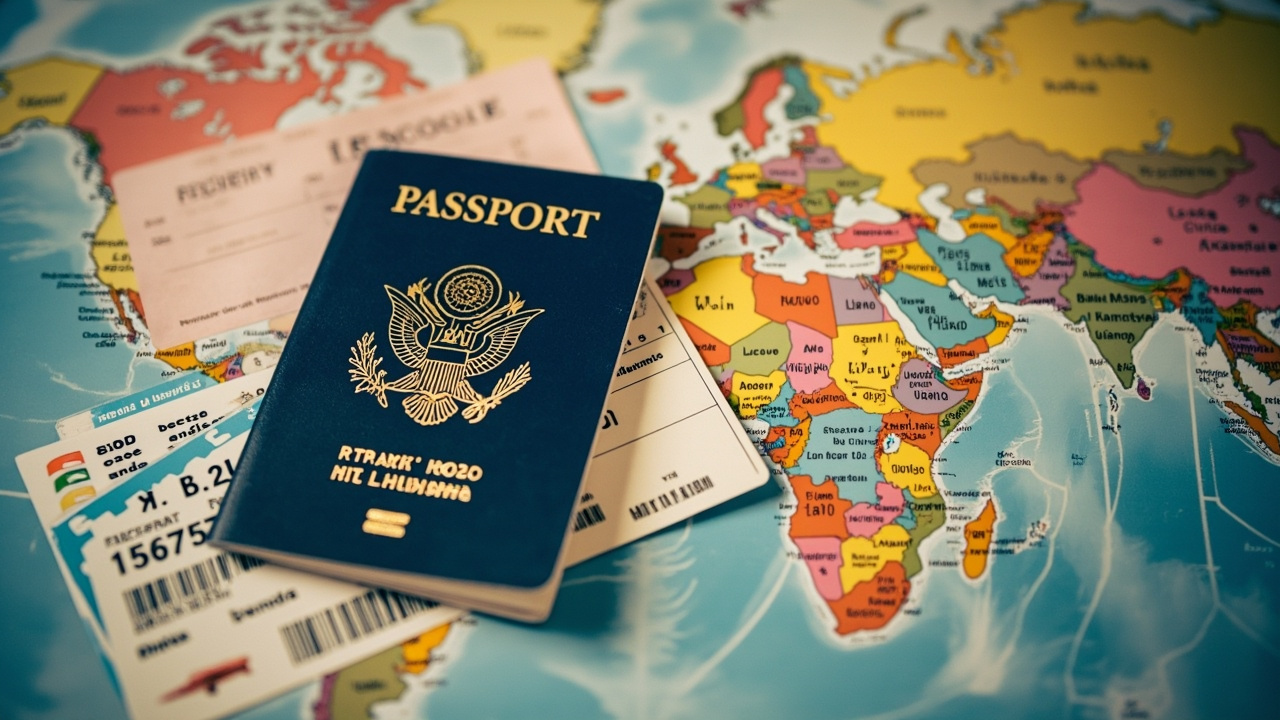
Proof of onward travel is any confirmed booking showing you leaving the country before your permitted stay ends — most commonly a flight reservation, but in many countries a bus, train, or ferry ticket across a land or sea border also qualifies. The document must carry a booking reference (PNR or operator confirmation number) that resolves in the carrier's system when checked.
Two different gatekeepers apply two different standards, and this distinction decides which method you should use:
- Airline check-in agents verify before you board. They follow IATA's Timatic database, which tells them the destination's entry rules — and because the airline pays the fine and the return-flight cost if you're refused entry, agents lean strict. Some will insist on an air ticket specifically.
- Immigration officers verify at the border. They generally accept any credible confirmed exit — including land and sea transport — and check it far less often than airlines do.
The practical consequence: your proof needs to satisfy the airline first, because that is where enforcement actually happens. Our complete proof-of-onward-travel guide covers the country-by-country rules.
Method 1: Onward-ticket reservation service — from $7, the purpose-built option
An onward-ticket service books a real, unpaid airline reservation in a global distribution system (Amadeus, Sabre, or Travelport) under your name and emails you the itinerary with a live PNR. It verifies on the airline's website exactly like a paid ticket for 48 hours to 14 days, then auto-expires. Cost: around $7 — under 2% of a typical long-haul fare.
This is the method built specifically for the onward-travel requirement: verifiable where fake PDFs fail, and two orders of magnitude cheaper than a refundable fare. The trade-off is the validity window — you order it within 24 hours of check-in, not weeks ahead. How the mechanics work: how temporary flight itineraries work for immigration checks.
Method 2: The US DOT 24-hour rule — free, but only for US routes
For flights to or from the United States booked at least seven days before departure, US Department of Transportation rules require airlines to offer free cancellation (or a free fare hold) for 24 hours. Book a real one-way exit flight, fly your inbound leg, clear the checkpoint, then cancel for a full refund.
It costs nothing if executed correctly, and the booking is fully ticketed — the strongest possible proof. The risks: the full fare sits on your card until the refund posts, the 24-hour clock is unforgiving, and the rule only covers itineraries touching the US. Miss the cancellation window and you own the ticket.
Method 3: Fully refundable fare — bulletproof, expensive, slow refunds
Buy a flexible/refundable one-way ticket out of your destination, show it at every checkpoint, cancel after arrival. Acceptance is 100% — it is a real paid ticket. The problems: refundable fares often cost 2–4× the discounted fare ($400–$1,500+ on long-haul routes), refunds take days to weeks to post, and some "refundable" fares deduct cancellation fees. Read the fare rules before relying on this.
Method 4: A cheap real ticket on a budget route — buy the exit, keep it
In regions dense with low-cost carriers, the cheapest honest option is sometimes to actually buy your exit: Bangkok–Kuala Lumpur, Bali–Singapore, Bogotá–Panama City and similar hops regularly price at $20–$60 on AirAsia, Scoot, VietJet, or Wingo. You get a permanently valid ticket, and you might even use it.
Downsides: it commits you to a date and route while you're still planning, changes cost fees on budget carriers, and last-minute prices can spike well past a reservation service. Compare against your actual plans — our cheapest onward ticket comparison runs the numbers per scenario.
Method 5: Bus, train, or ferry tickets — the overland answer
A confirmed bus, train, or ferry booking out of the country is legitimate proof of onward travel for immigration purposes in most destinations that have land or sea exits — and it is often the cheapest real document you can buy. A Bangkok–Penang train, a Singapore–Batam ferry, or a San José–Managua coach ticket typically costs $10–$40 and never expires the way an unpaid airline hold does.
Acceptance nuances, honestly stated:
- Immigration officers: generally accept confirmed overland exits — visa-exempt entry rules almost always say "onward travel," not "onward flight."
- Airline check-in agents: the weak point. Some budget-carrier agents, especially on routes into island nations or strict Timatic entries, want to see an air exit and will escalate or refuse an overland ticket. New Zealand and island states with no land borders obviously require air or sea proof.
- The operator matters: a booking from a real operator or platform with a verifiable confirmation number (12Go, official rail sites, ferry lines) reads as credible; a screenshot of a cash-payment "reservation" does not.
If your itinerary is genuinely overland — backpacking Southeast Asia, Central America, the Balkans — buy the real bus or ferry ticket. If you're flying into a strict-enforcement airport, pair trips like these with a flight reservation and keep the overland ticket as backup.
Which formats actually get accepted — and by which checkpoint?
Cost tables tell you what a format costs; they don't tell you where it fails. Acceptance is checkpoint-specific: the airline desk and the immigration booth apply different standards to the same document, and the format that sails past one can stall at the other.
Format-by-format, checkpoint-by-checkpoint
| Format | Airline check-in | Immigration booth | Cost profile | Main risk |
|---|---|---|---|---|
| Fully refundable ticket | Accepted — fully ticketed | Accepted | $400–1,500 floated for days–weeks | Cancellation fees hiding in "refundable" fare rules |
| Airline 24h-cancel ticket (US DOT) | Accepted — fully ticketed | Accepted | $0 if cancelled in time (full fare floated) | Miss the 24h window and you own the fare; US routes, direct bookings, ≥7 days out only |
| Reservation / PNR service | Accepted while the PNR is live — agents verify the record, not the payment | Accepted; same lookup | ~$7 outright | Expired window at the moment of check — a timing problem, fully avoidable |
| Bus / train / ferry ticket | Weakest point — some agents insist on an air exit | Generally accepted where land/sea exits exist | $10–40, kept | Agent discretion at budget carriers; useless for island destinations |
| Rental car + written itinerary | Rarely sufficient alone | Occasionally accepted as supporting evidence at land borders | Varies | No booking reference that resolves to a cross-border exit — most agents won't count it |
The pattern: anything with a live, name-matched booking reference that resolves in a carrier's system clears both checkpoints; anything that relies on inference (a car, a plan, a promise) survives only where an officer chooses to be generous — and airline agents, who carry the fines, choose not to be.
What the law actually asks for: "reservation" is in the text
The strongest written evidence that a reservation — not a purchased ticket — satisfies documentary requirements comes from the EU's own Visa Code. Annex II of Regulation (EC) No 810/2009, the non-exhaustive list of supporting documents consulates may request, opens its "intention to leave" section with: "reservation of or return or round ticket." The reservation is listed co-equal with the ticket.
Schengen consulates operationalize this the same way — many explicitly advise applicants not to purchase flights before a visa is granted. Outside the EU the drafting is looser ("proof of onward travel", "onward ticket"), but the enforcement reality shown in the table above follows the same logic: what gets verified is the existence of a confirmed exit booking.
Choosing by trip shape
Flying into strict-enforcement hubs — Thailand, Colombia, or Mexico — lead with a format from the top three rows, since your first verifier is an airline agent.
Genuinely overland routes can lean on real bus/train/ferry tickets, with a flight reservation as backup for the flight in. If your plan needs a verifiable air exit without buying one, a reservation with a live PNR is the purpose-built row of that table.
What about sponsor letters, sufficient funds, or residence proof?
These are supporting documents, not substitutes. A handful of entry regimes let officers waive the onward-ticket check for travelers showing strong ties — a residence permit for a neighboring country, an employment letter, or proof of funds to buy an exit ticket on the spot.
But the waiver is discretionary, airline agents cannot apply it at check-in, and relying on it means betting your boarding on an officer's mood. Carry a verifiable booking; bring the supporting documents as reinforcement.
The two "free" methods that backfire
Fake PDF generators. Free dummy-ticket sites produce an itinerary-shaped PDF with no booking behind it. The moment an agent enters the "PNR" into their system — a 30-second check — it returns nothing, and you are now the passenger who presented a fabricated document. Denied boarding is the good outcome. Details: what happens with no proof of onward travel.
Screenshot recycling. Reusing an old confirmation email or someone else's itinerary fails the same verification, with the same consequences. If the reference doesn't resolve under your name, it is not proof.
Skip the workarounds — get a verifiable reservation the same day.
✓ Real PNR · ✓ Verifiable on the airline's site · ✓ Accepted by airlines & embassies — From $7
Get Your Onward Ticket →Cost and acceptance: all five methods compared
| Method | Out-of-pocket cost | Airline check-in acceptance | Immigration acceptance | Best for |
|---|---|---|---|---|
| Onward-ticket service | ~$7 | High — live PNR verifies | High | Flyers, visa applicants, anyone on a deadline |
| US DOT 24-hour booking | $0 (fare floated on card) | Highest — fully ticketed | Highest | US-touching routes only |
| Refundable fare | $0 after refund ($400+ floated) | Highest | Highest | Business travelers with float |
| Cheap real budget flight | $20–60, kept | Highest | Highest | Routes you'll actually fly |
| Bus / train / ferry ticket | $10–40, kept | Medium — agent-dependent | High where land/sea exits exist | Overland backpackers |
| Fake PDF generator | "Free" | Fails verification | Fails verification | Nobody |
Frequently Asked Questions
Can I show a bus ticket as proof of onward travel instead of a flight?
Usually yes for immigration, sometimes no for airlines. Entry rules in most countries with land borders say "onward travel," which a confirmed bus, train, or ferry booking satisfies. The risk sits at airline check-in, where some agents — especially on budget carriers — insist on an air ticket. Carry a flight reservation as backup when flying into strict destinations.
Is it legal to use a temporary flight reservation as proof of onward travel?
Yes. A temporary reservation is a real booking created through the same GDS channels travel agents use — presenting it is not misrepresentation, because the reservation genuinely exists under your name. What is risky is a fabricated PDF with no booking behind it. Full analysis: is an onward ticket legal?
How much money do I save versus buying a refundable ticket?
A refundable long-haul fare runs $400–$1,500 that sits on your card for days to weeks; an onward-ticket reservation costs about $7 outright. If you simply need to satisfy a checkpoint — not actually fly the leg — the reservation does the same verification job for roughly 1–2% of the floated cost.
Do immigration officers accept onward tickets to a third country, or must I return home?
Any exit qualifies. "Onward" means leaving the country before your permitted stay ends — Bangkok to Singapore satisfies Thailand's rule exactly as well as Bangkok back to London. No entry regime requires the exit to point at your home country.
What happens if I show up with no proof of onward travel at all?
The most likely failure point is check-in, not the border: the airline can deny boarding outright, since it pays the fine and return transport if the destination refuses you. If you slip through to immigration without proof, officers may require you to buy a full-fare exit ticket on the spot before stamping you in.
Which countries actually enforce the onward-ticket rule?
Enforcement is strictest for visa-exempt entries to Thailand, the Philippines, Indonesia, New Zealand, Costa Rica, Panama, Peru, Brazil, and the UK, among others — and budget airlines enforce on nearly all international one-ways. Country-by-country detail: countries requiring proof of onward travel.
Does a rental car booking count as proof of onward travel?
Rarely on its own. A rental confirmation shows a vehicle, not a confirmed exit from the country, and there is no cross-border booking reference for an agent to verify. At land borders it can work as supporting evidence alongside a written itinerary, but airline check-in agents on international one-ways will almost always ask for a flight, or at minimum a confirmed cross-border bus, train, or ferry booking instead.
Do embassies accept a reservation instead of a purchased ticket?
In the Schengen system, explicitly yes: Annex II of the EU Visa Code lists "reservation of or return or round ticket" among acceptable supporting documents, and many consulates advise against buying a ticket before the visa is decided.
Elsewhere, requirements phrased as "proof of onward travel" are satisfied in practice by a confirmed reservation with a booking reference the consulate can look up — which is why the reservation must still be live during the review window.
Writer, onward travel basics
Nadia writes OnwardTicket’s guides to how proof of onward travel works: what airlines and immigration officers ask to see, how a flight reservation differs from a paid ticket, which visa types need one, and how to tell a genuine reservation service from a scam.
37 articles published

